It’s time to get dressed! Dressed up, that is.
For Halloween – or All Hallow’s Eve, as it was once known.
The last chance for the Dead to exact revenge on their still living enemies before moving on to the next world. However, gone are the days when this fear was taken seriously.
So seriously that people across Europe would wear masks and costumes so as not to be recognised by those rising from their graves one last time.
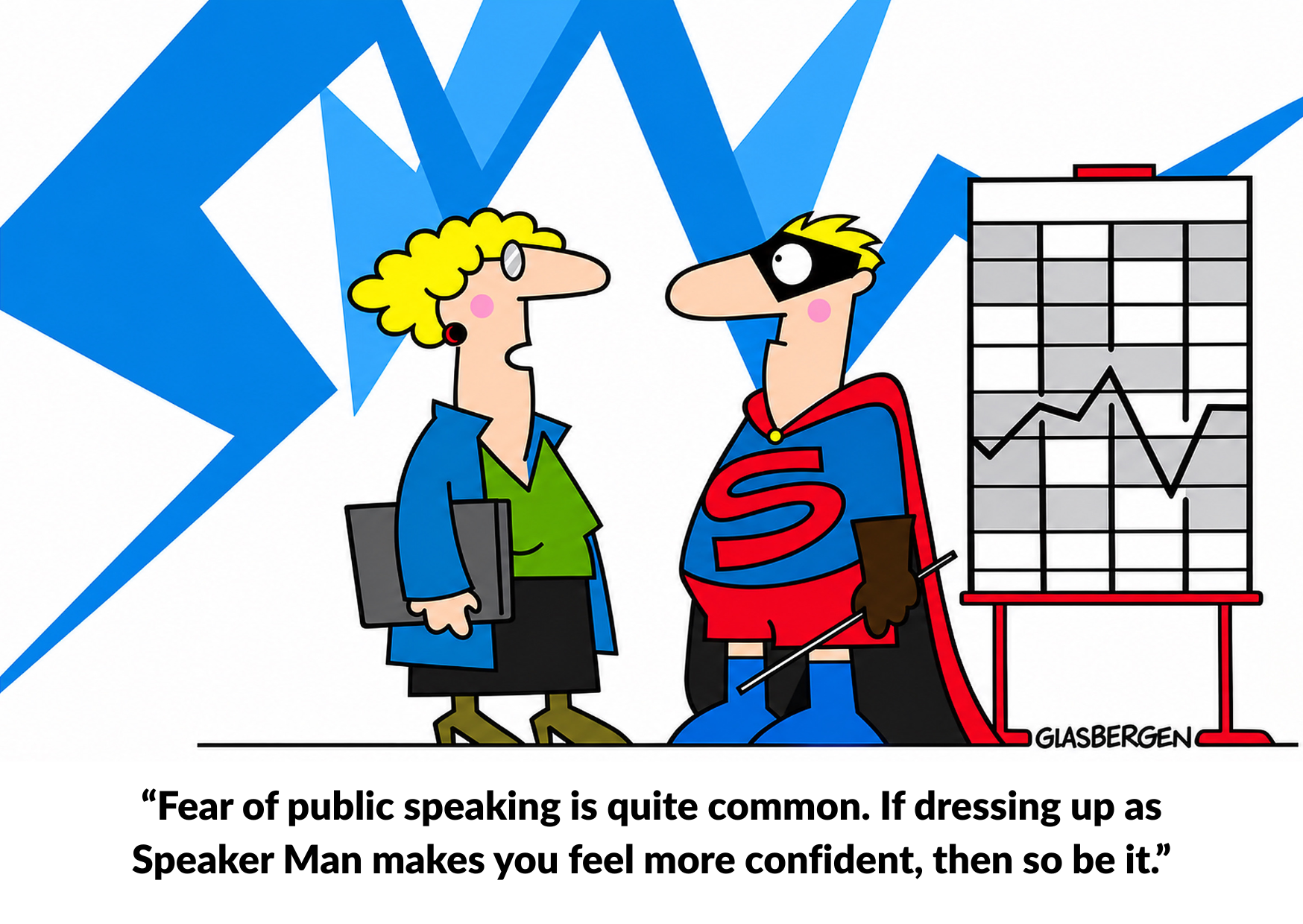
There may well still be a few ‘shocks’ on this last day of October. But not Fear. Not anymore.
After all, as Henry Thoreau scribbled in his journal back in 1851:
“nothing is so much to be feared as fear”
Others – notably US President Franklin D Roosevelt in his First Inaugural Address in 1933 – have echoed similar thoughts.
But what’s puzzling is if the fear of being mauled by a ghoulish zombie has been all but eradicated, why not also the fear so many have of speaking in public?
This is not in any way to suggest that this fear of speaking is greater than that of Death. That is quite simply a myth arising from a 1973 survey, promulgated by the US comedian Jerry Seinfeld, and completely debunked by scientific research in 2012.
Nonetheless, Glossophobia – the clinical term for the anxiety of speaking in public – is a very real fear. Classified as a specific form of social anxiety disorder (SAD), it apparently affects between 40-75% of the general population, with higher rates among women.
But here’s the thing: it’s natural to be nervous or excited - that is, not relaxed – before giving a presentation. Any speaker should be ‘keyed-up’ before speaking. That means they’re more likely to prepare, less likely to make mistakes.
Indeed, if you’re not worked up before presenting, you really should be asking yourself if you’re taking it seriously enough. Why’s the spark not there?
Nerves may feel uncomfortable. But they are also a source of energy, of passion.The aim should be to control and use them, not to eliminate.
And whilst there’s plenty of advice on how to prepare for a presentation, on how to control those nerves, there’s one technique that stands head and shoulders above all the rest.
Learn how to apply the Bite/Eyescan technique.
Taken directly from the way we all communicate in relaxed conversation, this will allow you – should you wish – to read notes, even a full script, without the audience realising you’re reading.
Alternatively, there’s always the approach taken by the 3rd US President and the primary author of the Declaration of Independence, Thomas Jefferson. As a sufferer of severe stage fright, he made only 2 spoken speeches in his entire 8 years as President: his two Inaugural Addresses. Instead, he started the tradition of sending the State of the Union Address as a written letter.
We can only wonder how Jefferson might have revelled in being able to send text messages and posting on social media.
But luckily for him, given his nervous disposition, it was to be another 150 years before Trick and Treating became a thing in the USA.
Now where’s my mask….
My TEDx coaching experience

I'm often asked about my role as a speaker coach and what it entails. In a nutshell, it's literally putting your life on hold for around 5 months!
As a coach, you are invited to attend all of the auditions and feedback (this can be a brutal process). Was the idea original, different, something new we hadn't heard before?
Read more
Help us Grow our Community!
Please feel free to forward this newsletter to colleagues/friends who could benefit from receiving them.
Feedback or ideas for future editions? Feel free to send us a quick message to this email address. We would love to hear from you.
Until next month!
Warmest regards,
Team Connect
